Last updated November 21, 2026
 Raised-panel steel
 Carriage house
 Modern flush
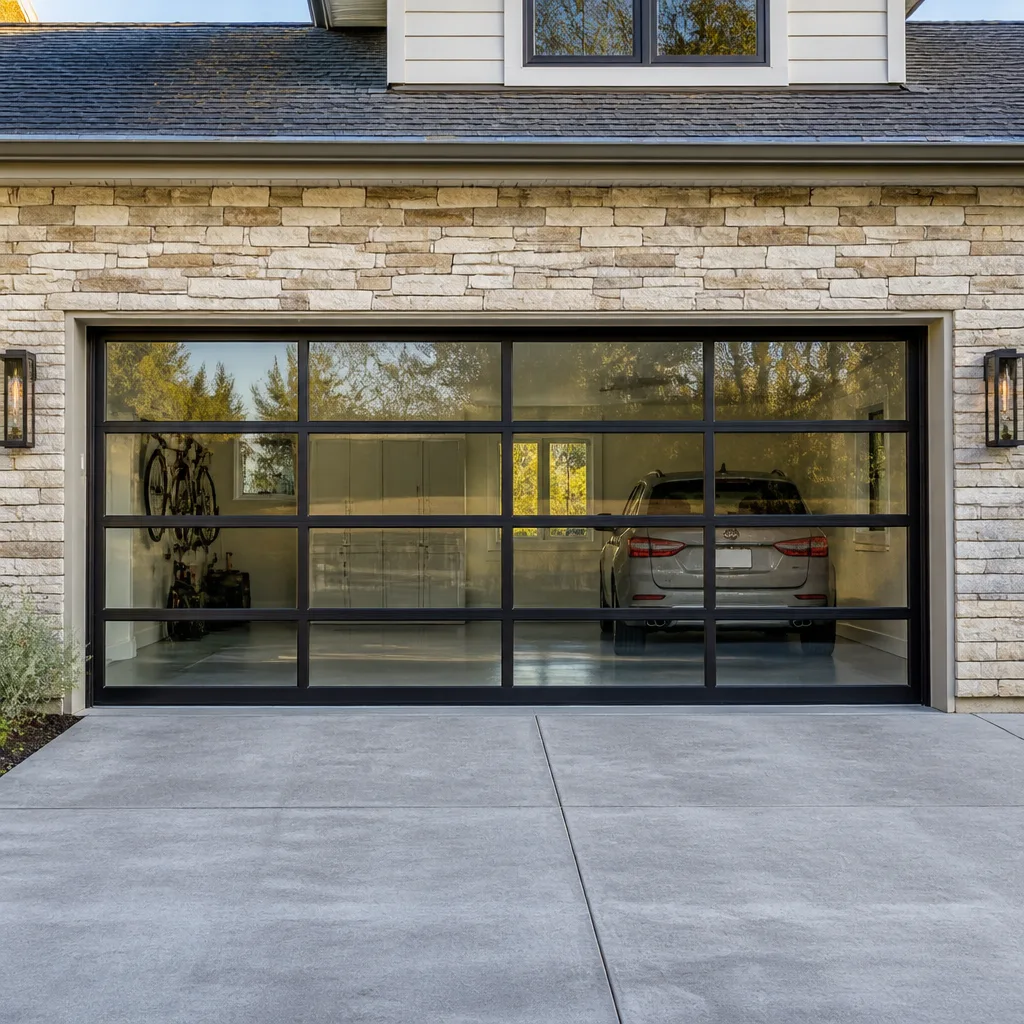 Full-view glass
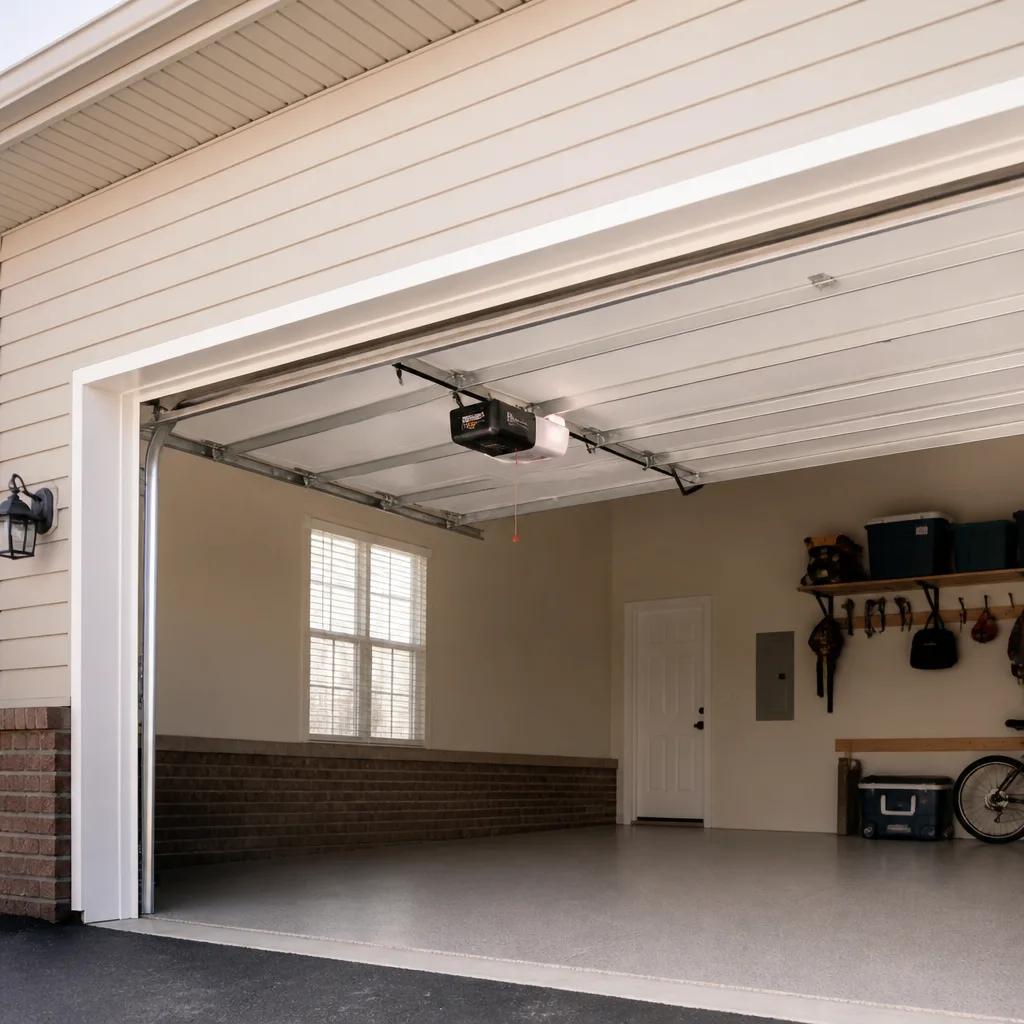 LiftMaster openers
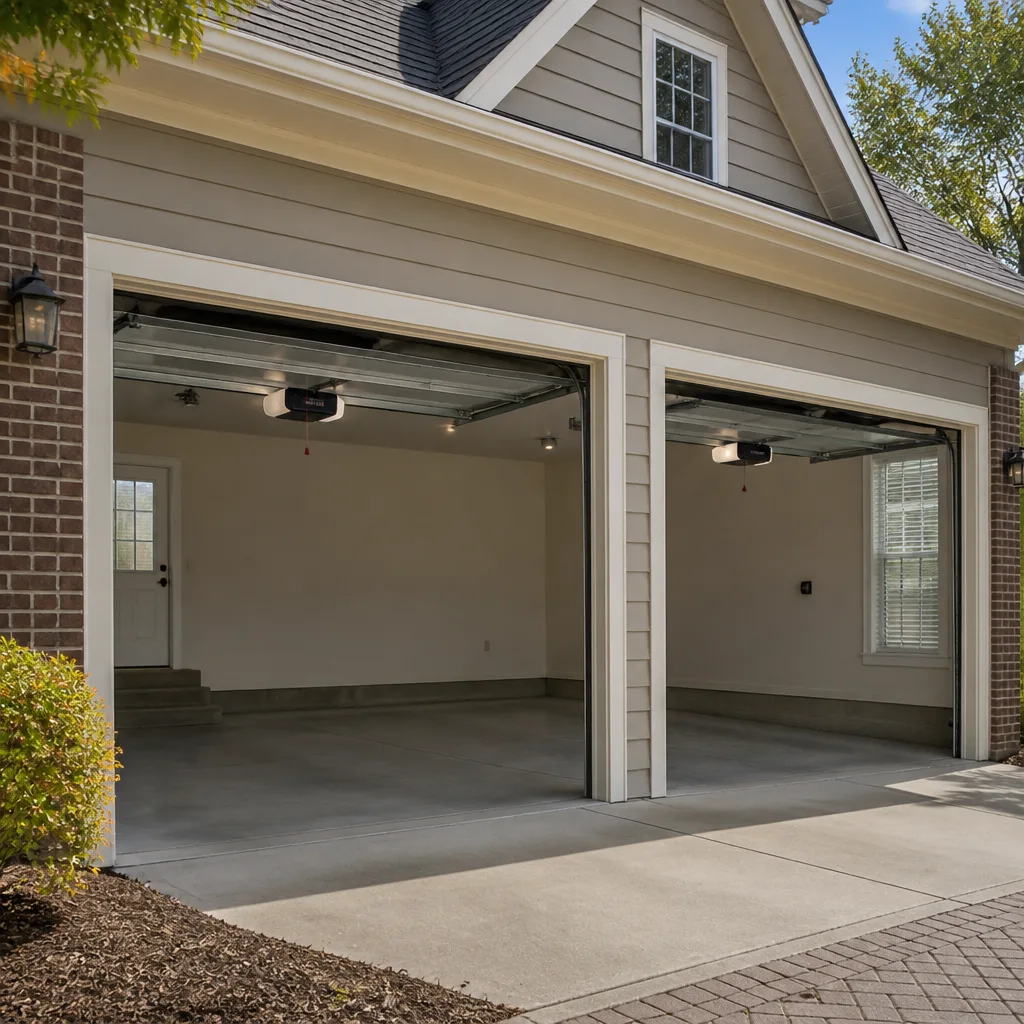 Chamberlain openers
Full 25-point door and opener safety check with every visit - springs, cables, rollers, tracks, and your LiftMaster or Chamberlain opener included
You get a price before we start. It does not change when the pro arrives.
Get your free estimateGarage Door Warning Signs: A Green Lake Homeowner’s Reference Guide
The grinding noise your door makes on the way up isn’t breaking in. It’s a roller that’s been failing for weeks, and by the time it sounds bad enough to call someone, it’s usually already damaged the track it runs on. That’s the pattern we see again and again in Green Lake: a door doesn’t fail all at once. It sends signals for months, one small quirk at a time, and most of those get filed away as “normal.” This reference guide walks through every warning sign a garage door gives you, connects each noise and symptom to the component behind it, and shows you how to sort a warning that can wait a week from one that means you should park the car outside tonight. By the end you’ll have a working checklist you can use every time your door sounds a little off.
Quick Answer
Most garage door failures show warning signs weeks or months before they break: strange noises (grinding, squealing, clicking, banging), visual telltales (uneven gaps, a door that sits crooked, rust streaks, frayed cables), and opener behavior (slow response, reversed direction, mid-cycle stops). Any sign you can’t explain is worth investigating, and a door that stutters, drops, or moves with a loose cable should be taken out of service until a technician looks at it. The list below tells you which is which.
Styles & brands we work with
- Raised-panel steel
- Carriage house
- Modern flush
- Full-view glass
- LiftMaster openers
- Chamberlain openers
Table of Contents
- What the Noises Are Telling You: A Symptom-to-Cause Map
- Visual Warning Signs You Can Spot With No Mechanical Knowledge
- What Your Opener’s Behavior Reveals
- Opener Problem or Door Problem? A Quick Check
- Weather, Seasons, and Green Lake’s Garage Door Reality
- The Cascade Problem: How One Small Warning Turns Into Big Damage
- How to Triage Urgency: Scheduled Call vs. Stop Using the Door Now
- A Simple Monthly Walk-Around for Green Lake Homeowners
What the Noises Are Telling You: A Symptom-to-Cause Map
Sound is the earliest warning sign a garage door gives. A door in good working order makes a soft, consistent rumble and nothing else. Every other noise is a specific component saying something, and the type of noise tells you what. This is the single most useful thing you can learn from this guide: if you can describe the noise, you’re most of the way to knowing which part is failing.
Here’s how the common noises map to the components behind them:
- Grinding: A worn roller that no longer rolls smoothly, or a track the roller has chewed a groove into. This is the noise most homeowners wait out, and it’s the one that spreads damage the fastest because metal on metal wears both surfaces.
- Squealing or high-pitched squeak: Usually a dry hinge, a failing bearing in a roller, or a torsion spring that’s starting to bind. A squeal on just one side of the door points toward that side’s hardware.
- Banging or popping: A torsion spring that’s about to let go, or a door that’s jumping a track. A single loud pop followed by a door that won’t lift is the classic snapped-spring sound. Stop using the door and call.
- Clicking that repeats: Often the opener’s gear or travel limit, or a loose section joint flexing under the opener’s pull. If the door doesn’t move when you hear the click, the opener is running but the door isn’t.
- Rattle at the top or bottom: Loose hinges, missing bolts, or a bottom bracket that’s working loose. Small noise, real risk if left alone.
What makes this map useful is the pattern behind it. Noises that change with speed or direction point to rollers and track. Noises that happen at the same spot every cycle point to hinges, brackets, or the opener. Noises that get suddenly louder and then the door stops working point to springs and cables. When we take a Green Lake call, the first question we ask is what the door sounds like and when the noise starts, because it narrows the repair before anyone arrives.
Visual Warning Signs You Can Spot With No Mechanical Knowledge
You don’t need to understand how a garage door works to spot most of the warning signs. You just need to look, then look again from a different angle. The trick is that doors fail on a curve, not all at once, so the eye has to be trained to notice the small drift that looks normal until it doesn’t. Here’s what we tell Green Lake homeowners to check when they walk out the door.
- Stand back and look at the proportions. The gap between the door and the frame should be even on both sides, and the door should sit level at the floor. Any unevenness at the top corners or a door that touches the floor on one side is a real warning.
- Check the cables. Look at the two cables running down the sides. A good cable is clean and tightly wound. A cable with frayed strands, a kink, or a fuzzy texture is compromised and needs to be replaced before it lets go.
- Look for rust, especially in patterns. A rust spot on a hinge is normal. Rust that runs in a line along a track, or along the seam of a panel, means moisture is sitting where it shouldn’t.
- Look at the bottom seal. A split, curled, or missing bottom seal lets water and grit in, and it’s a two-minute fix when caught early.
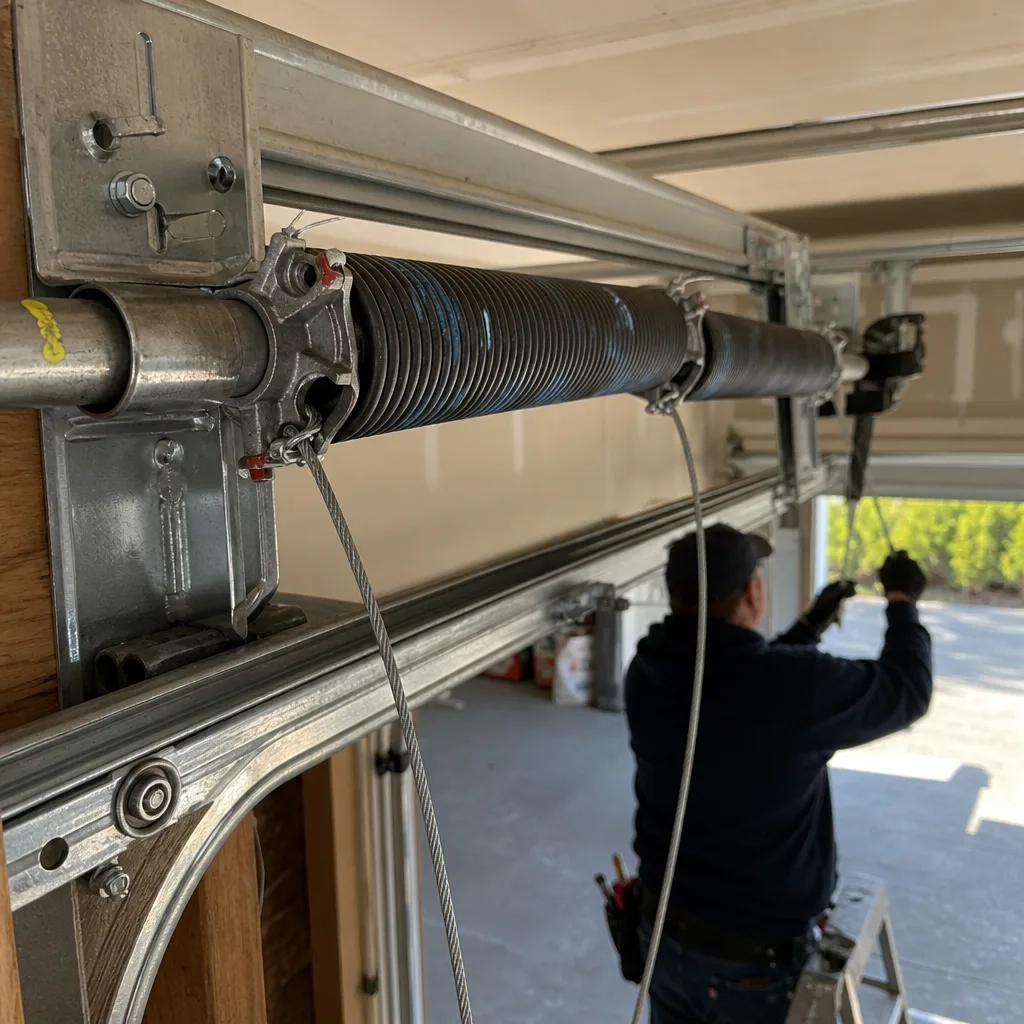
- Look at the springs. Torsion springs live on the bar above the door; extension springs run along the sides. Either kind develops visible gaps or misalignment before failure. Don’t touch them. Just note the condition.
- Check the door from the inside. A track that looks straight from outside can have a bend on the inside face where the roller meets it.
If you’re noticing a cable, spring, or track problem, it’s worth knowing which repair you’re likely looking at. Our garage door repair page covers the common fixes and what each involves. For a suspected spring, we keep spring repair as its own named service because it’s the most mechanically demanding repair in this trade and it needs a technician who does it every week.
What Your Opener’s Behavior Reveals
The opener is the door’s brain, and its misbehavior points to a different set of causes than a grinding door does. A door that responds slowly, reverses unexpectedly, or stops halfway is telling you something specific. The mistake most homeowners make is assuming the opener is failing when the door is actually the problem. Oftentimes the opener is fine and it’s just straining against a door that has become heavier than it used to be.
Here’s what each behavior typically means:
- Slow response: Often a weak opener gear or motor, a failing capacitor, or a door that’s now heavier than the opener can handle because a spring has lost tension. An opener that once opened the door in five seconds and now takes ten is telling you it’s working harder.
- Reversed direction: The safety reverse feature is triggering, most often because the opener’s force limit is set too tight or a door section is binding. If the door reverses as it’s closing, the opener thinks it hit something, and it’s almost always right about the safety threshold being exceeded.
- Mid-cycle stops: The opener’s travel limits have drifted, or the door is binding at a specific height. If the door stops at the same height every time, there’s a physical obstruction or bend. If it stops at different heights, the limit switch or control board is misreading.
- Remote or keypad only works up close: A dying remote battery, a signal interference issue, or an aging receiver. Solvable, usually without replacing the whole opener.
- Lights blink and nothing happens: The opener is behaving like the safety sensors are blocked. Clean the lenses and check for sun or reflection interference before assuming a mechanical problem.
Older units especially, the ones you’ll find on a lot of Craftsman and older LiftMaster or Chamberlain systems in Green Lake garages, can show these behaviors for weeks before they quit outright. For the repair side of that, our garage door opener repair page covers how we diagnose it and which systems we work on, including legacy and builder-grade units alongside modern Wi-Fi and smart-home platforms.
Opener Problem or Door Problem? A Quick Check
Before you call anyone, there’s a simple test that separates an opener problem from a door problem, and it’s worth knowing because it changes what kind of repair you’re looking at. Release the door from the opener using the emergency release cord. That’s the handle hanging from the opener carriage. Then lift the door by hand.
A healthy door should lift with one hand and stay where you put it. If it’s heavy, if it drops, or if it lifts hard, the problem is mechanical: springs, cables, rollers, or track. If the door lifts easily and smoothly but the opener still won’t move it, the problem is in the opener. Run that check and you’ll know which half of the system to describe when you call, which saves diagnostic time.
If a spring has lost tension, the door will feel ten times heavier, and that’s the moment to stop. Torsion springs are under enough tension to cause serious injury if you try to work on them yourself, and a door with a failing spring can drop. That’s why spring repair is a named service for us, not something we lump in with a general handyman call. Our technicians have up to 13 years of experience and know exactly what a binding spring feels like before it breaks.
Weather, Seasons, and Green Lake’s Garage Door Reality
Green Lake’s wet, cool climate shapes which warning signs show up first and when. This isn’t a place where heat dries out a door or a place where snow and ice do the damage. Instead, it’s the steady moisture and the seasonal swing that work on the hardware. Knowing that helps a Green Lake homeowner read the door’s signals in the right order.
Here’s what matters in a Green Lake garage:
- Moisture and rust: Green Lake’s damp fall and winter months are when we see the rust patterns develop on hinges, tracks, and bolts. A hinge that rusts will start to squeak before it seizes, which is the squeal you hear on the way up.
- Cold-weather spring fatigue: Springs lose tension faster in cold mornings. A door that seems fine all summer but feels sluggish on a cold Green Lake morning is telling you the spring is losing its energy.
- Seal wear from wet seasons: The bottom seal takes a beating from standing water and grit, which is why checking it is part of any monthly walk-around.
- Lubrication intervals: A door that sits in a damp climate needs lubrication more often than the manufacturer’s generic schedule suggests. A dry roller is a grinding roller, and a grinding roller eats the track.
One result: a lot of the warning signs we’re called out to in Green Lake are what we’d call “quiet” signs. Nothing is broken yet. The hinge is just starting to rust, the cable is just starting to show a strand, the door is just a little slower on cold mornings. Those are exactly the signs that are worth a scheduled visit, because they’re the cheapest repairs and the easiest to prevent from cascading.
The Cascade Problem: How One Small Warning Turns Into Big Damage
Here’s why we take even minor warning signs seriously. A garage door is a system, and every part loads against the others. A bent track doesn’t just bend. It makes a roller drag, the drag adds load to the cable, the added load strains the spring, and the spring’s extra tension feeds back into the opener. By the time the door finally stops working, you may be looking at a bent track, two stretched cables, a fatigued spring, and a worn opener gear, all from one small problem that was visible for weeks.
The cascade is predictable, and it goes in roughly this order:
- Stage one: A worn roller or a slightly bent track. The door still opens, but it grinds. This is the cheapest fix in the entire chain.
- Stage two: The roller wears a groove in the track and starts to drag. Now the door is heavier to lift, and the spring takes up the difference.
- Stage three: The spring is working harder than it was designed to. A torsion spring stretches, an extension spring elongates, and the door starts to hang off-level.
- Stage four: The cable takes the extra strain from the dragging door and starts to fray. This is the point of highest failure risk. A frayed cable can snap under load and the door can drop on one side.
- Stage five: The opener is pulling harder than it should. Its gear and motor run hot, the force limits trip, and eventually the opener gives up.
The lesson: the moment to act isn’t when the door stops working. It’s when the grinding starts, because that’s stage one. By stage four, the bill covers the cable and spring and probably the track. Catching it at stage one keeps it to a roller and a track adjustment. This is the entire reason we tell Green Lake homeowners that a grinding door is worth calling now, not after it becomes a snapping door.
If you’re not sure how far along the chain your door is, the quickest way to find out is a free estimate from someone who works on springs, cables, and openers every day. That’s all we do; garage doors are the whole business, and we choose not to do anything else.
How to Triage Urgency: Scheduled Call vs. Stop Using the Door Now
Not every warning sign means drop everything, and panic costs money. But some signs are genuinely dangerous, and knowing which is which is the most practical skill in this guide. Here’s how we’d triage a door in Green Lake if we were standing in front of it.
Stop using the door immediately if you see any of these:
- A snapped or visibly broken spring, or a pop followed by a door that won’t lift
- A frayed or snapped cable
- A door that’s noticeably crooked, hanging on one side, or off the track
- A door that reverses or drops unexpectedly when closing
- A loud bang, then a door that lifts only a few inches and stops
For those, leave the door in the open or closed position, keep the car outside, and call. A trained professional should be the one to look at a failed spring or cable, not a homeowner and not a general handyman who doesn’t work on them daily.
A scheduled appointment is fine for these signs:
- A grinding or squeaking noise that’s new but the door still works
- A door that’s a little slower than it used to be on cold mornings
- A bottom seal that’s split or curling
- One roller that’s clearly worn while the rest look fine
- An opener remote that only works from close range
The general rule: signs that could cause the door to fall or come off its track are urgent. Signs that mean the door still works but is wearing out are scheduled. Both are worth calling about. Neither is worth trying to fix yourself, especially on the spring, cable, and track system.
If you’re not sure which category you’re in, call (866) 429-4392 and describe what the door is doing. We’ll tell you whether to stop using it or whether a scheduled visit is fine, and the estimate is free either way.
A Simple Monthly Walk-Around for Green Lake Homeowners
Ten minutes once a month catches almost every warning sign before it’s expensive. This is the routine we’d suggest to any Green Lake homeowner, and it doesn’t require any mechanical skill.
- Run the door and listen. Just once, on the way to or from the car. Compare it to last month. Any new noise is a signal.
- Look at the door from across the street. Straight gap on both sides, level at the floor, door sits square.
- Look at the springs and cables. Gaps, kinks, or frayed strands are a call. Don’t touch them.
- Test the safety reverse. Put a small object in the door’s path and let it close. It should reverse. If it doesn’t, that’s a call.
- Check the bottom seal. Split, curled, or missing means it’s time for a new one.
- Look for rust on the hinges and track. A small spot now is one hinge. A rust line in a year is a track replacement.
- Lubricate the hinges and rollers. A dry door is a noisy door, and repetitive noise is the first stage of the cascade.
If you can do this consistently, you’ll catch most failures at stage one. And if the door starts showing signs you’re not sure how to read, that’s exactly when a free estimate is worth the call. Our Garage Door Repair Green Lake page gives you the fastest way to reach us, and our team can walk through what your door is doing and whether a minor sign is actually a major one.
Common Mistakes to Avoid
- Treating a grinding noise as normal. A grinding door is a worn roller or a bent track. Waiting it out is the most expensive thing you can do, because the grinding wears both the roller and the metal it rides on.
- Ignoring a door that looks slightly crooked. A door off-level on one side means a spring, a cable, or a track has shifted. It won’t straighten itself out, and it’s the precursor to a door off its track.
- Assuming the opener is failing when the door is the problem. A slow or reversing opener is often straining against a heavier door. Replacing the opener without fixing the door is a band-aid, and the new opener will wear out just as fast.
- Letting a small rust spot turn into a rust line. Green Lake’s damp season is hard on hinges and tracks. A spot is a hinge. A line is a track. One is a cheap fix; the other isn’t.
- Using the door after a spring or cable fails. A door with a snapped spring or a frayed cable is not just inconvenient. It can drop. Keep the car outside and call a technician.
- Calling a general handyman for spring or cable work. Spring and cable repair requires the right tools, the right training, and the right understanding of a system under real tension. It’s a specialist job, and it’s the reason we treat spring repair as its own service.
- Skipping the monthly walk-around. The whole point of this guide is that failures are visible for weeks. Ten minutes a month is the difference between a roller and a whole-door failure.
See the difference
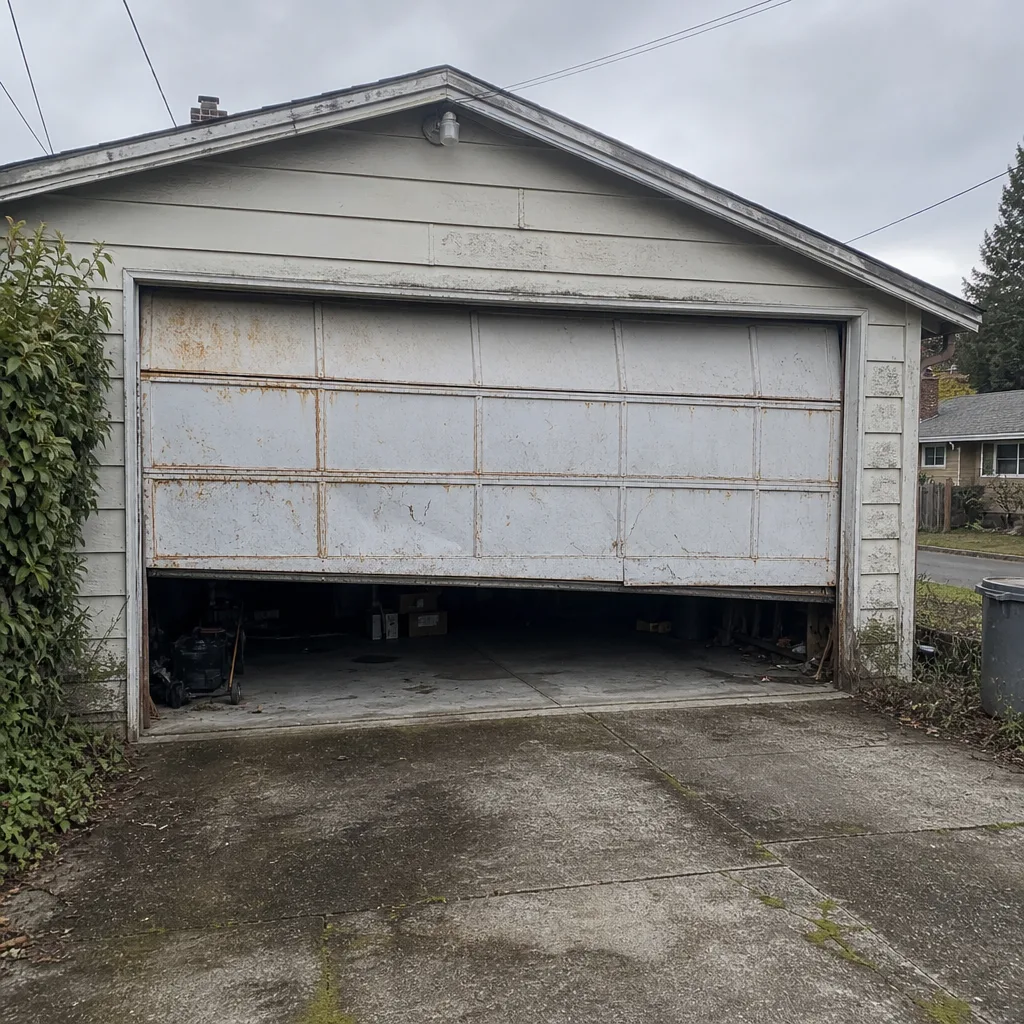 Before
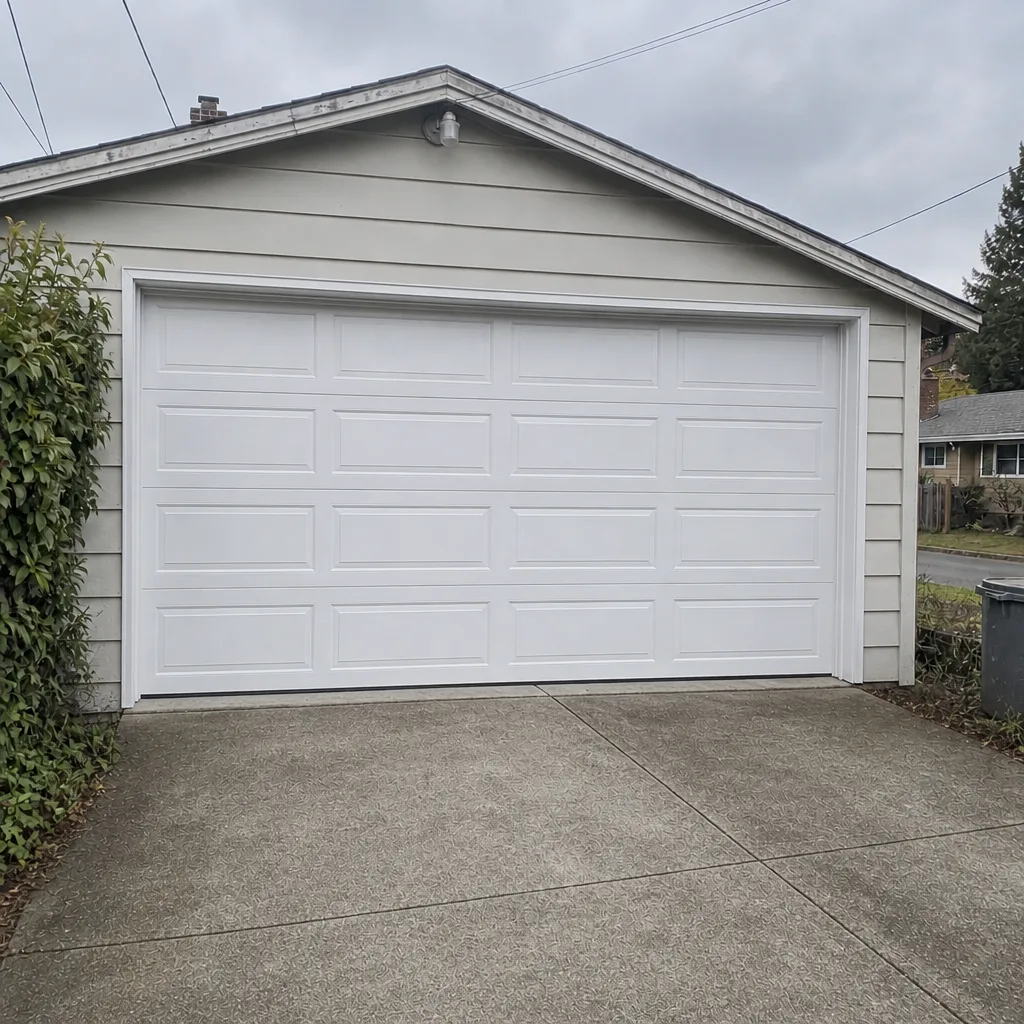 After
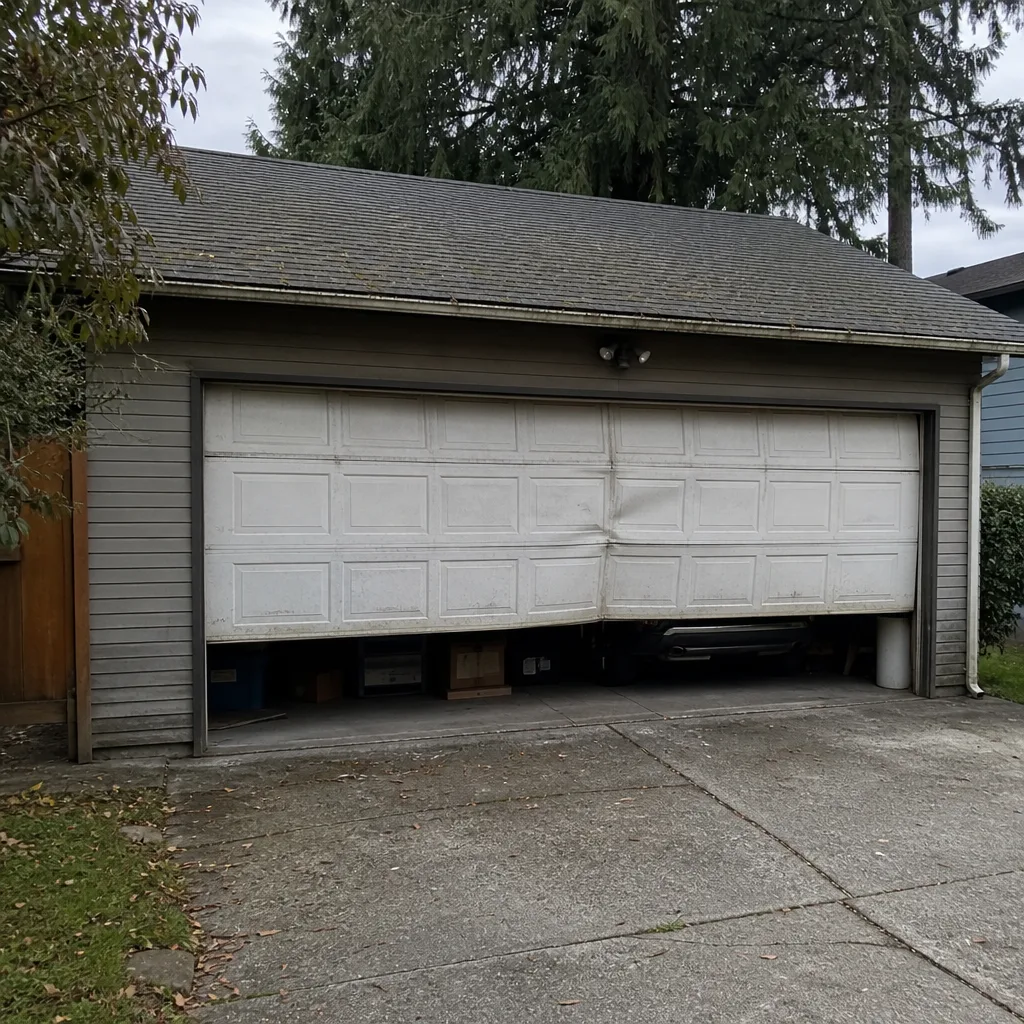 Before
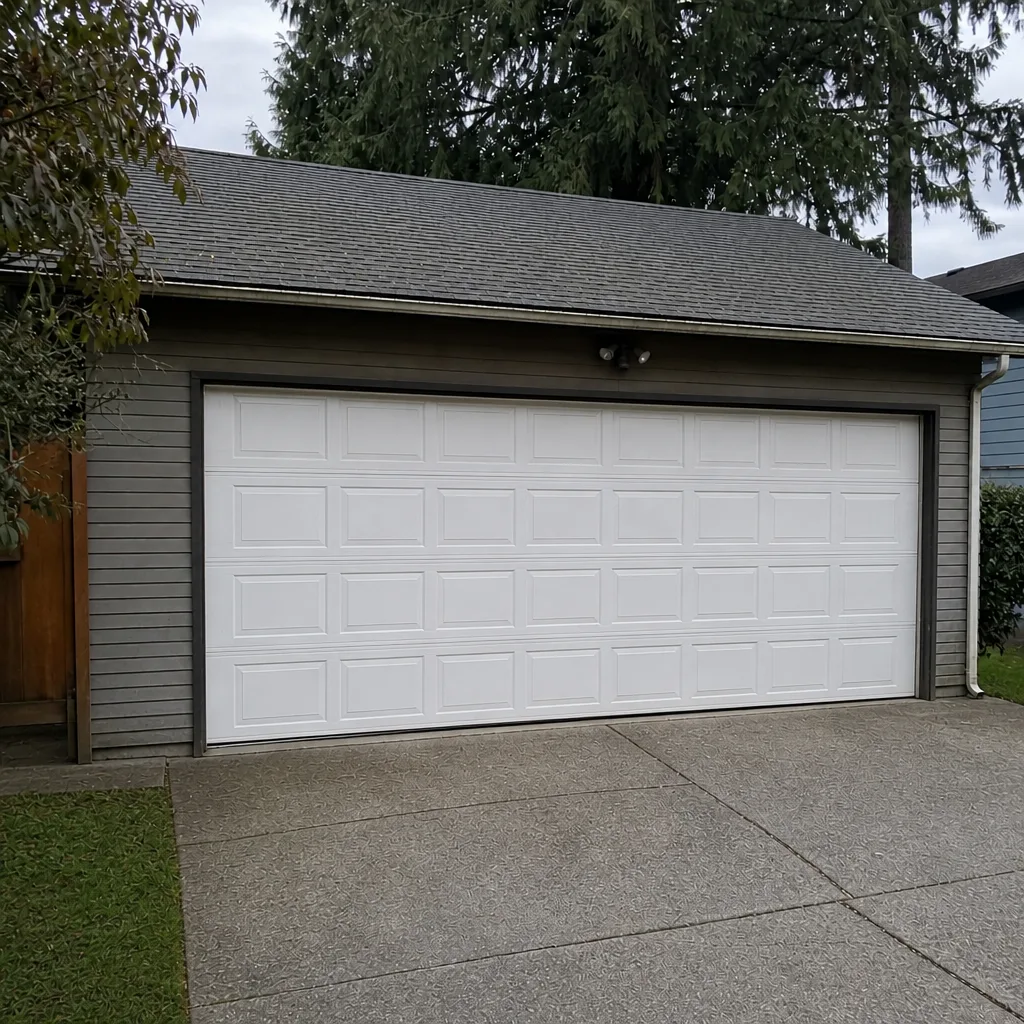 After
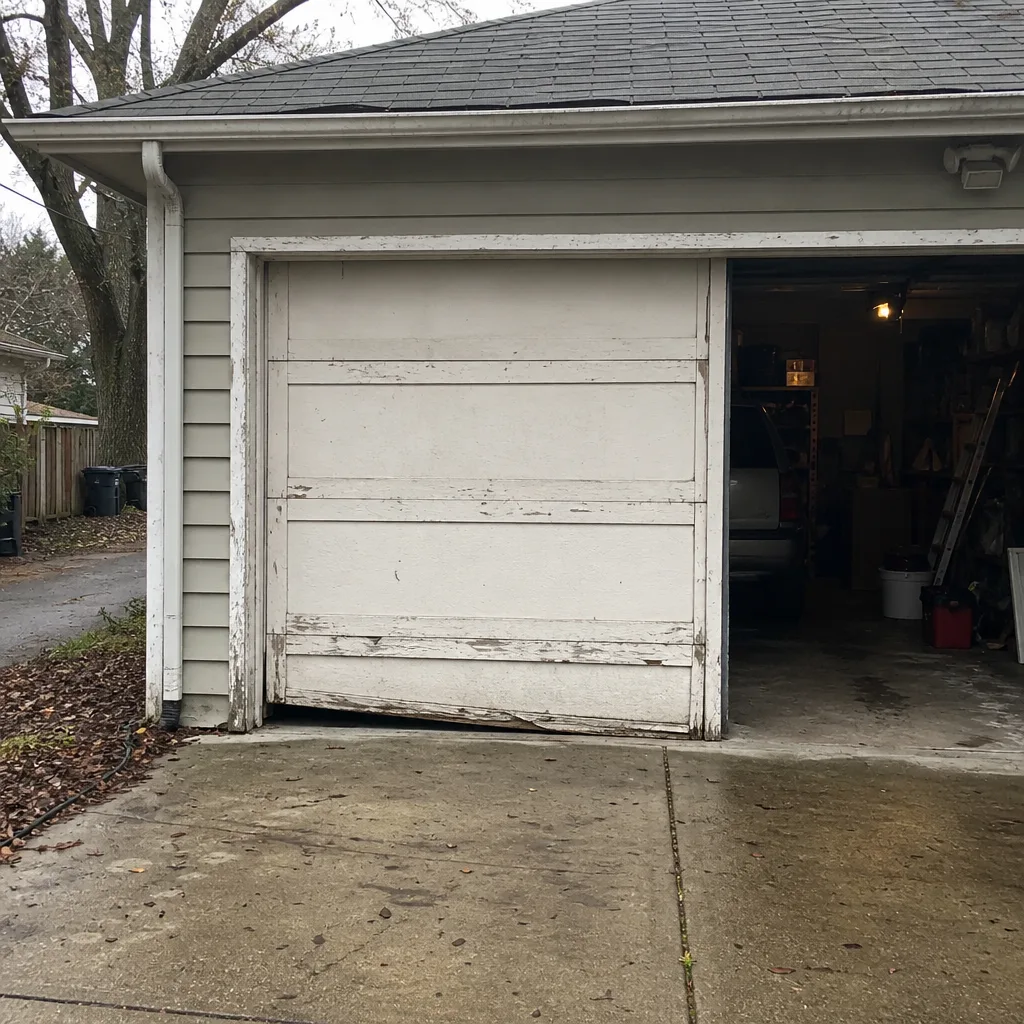 Before
 After
When to Call a Professional
Call a professional if the door makes a new noise that doesn’t go away, if it looks crooked or sits unevenly, if the opener behaves erratically, or if you see any sign of a failing spring or cable. If you’re not sure, call anyway and describe what the door is doing. That’s the point of a free estimate. We’ll tell you honestly whether it’s a scheduled fix or a stop-using-it-now situation, and we’ll tell you whether repair or replacement is the better call depending on the door’s condition.
For Green Lake homeowners, a door that’s showing warning signs is worth looking at before it becomes a winter-morning emergency. Garage Door Repair Green Lake offers free estimates in Green Lake, and our technicians have up to 13 years of experience with the major brands: LiftMaster, Chamberlain, Genie, Clopay, Amarr, Wayne Dalton, Craftsman, and Raynor. Call (866) 429-4392 for a free estimate, and we’ll help you read the warning signs while the repair is still small.
If the door is beyond repair, a new installation is the right call, and we handle complete new garage door installation from start to finish. Our garage door installation page covers the options, the door styles, and how a replacement is measured and scheduled. A failing door is an opportunity, not a dead end: a new door adds security, quiet, and a fresh look to the house.
Frequently Asked Questions
The first sign is usually a new noise: a grind, a squeal, or a click that wasn’t there last month. It means a roller, hinge, or spring has started to wear, and it’s the cheapest moment to have it looked at. Call (866) 429-4392 if you’re hearing something new and aren’t sure what it is.
Sometimes. A spring that’s about to fail can look misaligned, gap in the coils, or make the door feel heavy and off-balance. But a spring often snaps without warning, which is why a professional check is worth it if you see any sign of failure. Don’t touch a spring yourself; call (866) 429-4392.
A grinding noise almost always means a worn roller or a bent track that the roller is dragging against. Left alone, the grinding wears the track, adds strain to the spring, and can cascade into a cable and opener problem. Call (866) 429-4392 for a free estimate.
Spring pricing in Green Lake falls in the typical range for this market, and the written estimate you get sets the final price. A torsion or extension spring is a specialist repair; expect the estimate to cover the spring and the labor to install it safely. Call (866) 429-4392 and we’ll quote it exactly.
A door that reverses or stops unexpectedly is a safety issue, so yes, stop using it until a technician checks it. The cause could be an opener limit setting, a binding door, or a failing safety sensor, and each one needs a different fix. Call (866) 429-4392.
Not necessarily. A new door is lighter and easier on an opener, but an opener that’s already worn won’t be fixed by a door replacement. Diagnosis matters: once the cause is known, we can tell you whether the door, the opener, or both need attention. Call (866) 429-4392 for a free estimate.
The Bottom Line
Garage doors fail in slow motion. A new noise, a slightly crooked gap, a rusty hinge, a sluggish opener: each one is a message, and each one is cheapest to act on at the moment you notice it. The cascade runs from roller to track to spring to cable to opener, and stopping it early is the entire game. Watch your Green Lake door once a month. If something changes, call. If it’s loud, crooked, or a spring or cable looks wrong, stop using it. A free estimate is the cheap step that keeps the repair small.
If you’ve read this and you’re still not sure whether your door’s warning sign is a scheduled call or a stop-using-it call, just describe it to us. Call (866) 429-4392 for a free estimate.
Written by the team at Garage Door Repair Green Lake.